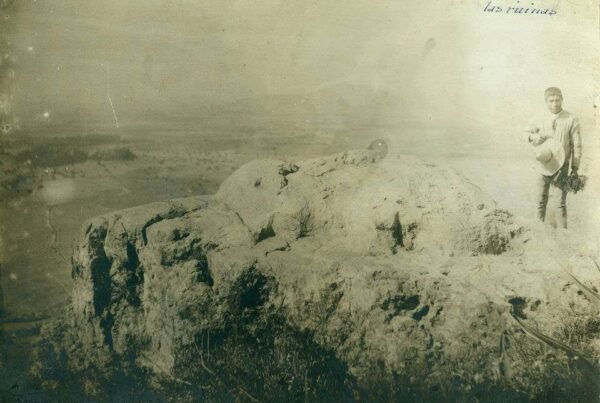
Throughout its existence, the natural and architectural complex of Tetzcotzinco, the “so famous and celebrated in stories” according to various chroniclers like Fernando de Alva Ixtlilxóchitl, has suffered many times from social changes, forgetfulness, and human ambition. From the crusade of Juan de Zumárraga and Domingo de Betanzos in the 16th century, to the mining expeditions of the 19th century that blasted entire parts of the place, and tourist development projects like the one promoted by the Pro Tezcotzinco Foundation in 2002, the wounds whose scars we can still see.
The present is not foreign to these conditions; the lack of territorial planning, insufficient resources for its conservation, and real estate pressures have it surrounded. In recent years, the VERDMX group project has been added, which apparently seeks to benefit the place by restoring it, creating sustainable development, and tourist infrastructure.
Since VERDMX made it public in the Mexican Senate, there have been constant criticisms about their lack of knowledge of the area, shortcomings in the project design, and exclusion of the communities in decision-making, imposing a work plan. After this, the information on their website was modified, justifying that they are still in the coordination and funding-seeking phase.
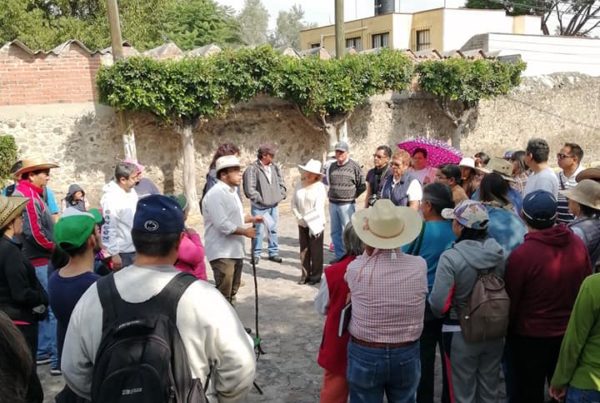
The above contrasts with the actions they carry out in Texcoco. In May 2026, after the presentation in the Senate, they held an event together with the City Council where they tried to show what they had planned. It ended up being more of a letter of good intentions supported by academics who that very day had their first contact with the archaeological site. During several audience interventions, other academics and citizens made them aware of how poorly planned their project was.
In the face of rejection, in June and July, they began holding informational assemblies in various villages near the Tetzcotzinco hill, where through threats, incorrect or incomplete data, pressure from public officials, and false promises of large sums of money, they tried to co-opt and take advantage of the villages. It’s really concerning how the government apparatus sides with a private company for a top-down development project that wants to be imposed under the pretext of rescuing the Tetzcotzinco archaeological zone. VERDMX writes it as Tetzcutzingo—they don’t even understand its name because they only see it as a way to get rich at the expense of the community’s heritage and well-being.
Various communities have spoken out about it, rejecting the initiative and pointing out its shortcomings and lies. On February 10, the ejido, the vigilance committee, rolled water, drinking water, COPACI, and the San Pablo Ixayoc delegation denied the statements of the municipal president of Texcoco, Nazario Gutierrez, who claimed that their town would give water volumes for the VERDMX project. At the beginning of June, an extraordinary assembly was held in the town of San Dieguito Xochimanca requested by VERDMX, where the community’s little interest in supporting their project was shown. Even so, pressure was applied to make them sign documents and people were threatened with “losing opportunities” because other communities would accept. Despite this, a second assembly was held, now with the attendance of Gabriela Rodriguez, director of VERDMX, where the same situation was repeated. In mid-July, the Delegation of San Nicolás Tlaminca stated that VERDMX called for an ‘Informative and Strategic Assembly’ without authorization or coordination with the town authorities, making it public that they refused to hold a community meeting since they do not provide the minimum technical, legal, or environmental information to evaluate their initiative. Alongside these actions in the communities, researchers, academics, students, and the general public from other parts of the municipality of Texcoco and neighboring municipalities held in-person and virtual events where the lack of planning was highlighted and the intentions of the alliance between VERDMX and the Texcoco City Council were questioned, which is recorded in official and public documents.
In these months we have been patient with the information they provide regarding their ‘rescue’ project, but it seems that they only act as intermediaries. They don’t add value; on the contrary, they offer crumbs to the locals, and it really seems that their true and only intention is to develop a high-impact real estate project. Disasters resulting from merely seeking economic profit for a small group are not new in the region. We have the disaster of the ecological, tourist, and cultural rescue of Parque Ejidal El Contador de Atenco, which destroyed archaeological remains and put pressure on water use in an area where it is already a very scarce resource.
For generations, the communities of Texcoco have managed their resources. They do not need an intermediary. They do not need VERDMX or its rescuing, but they will continue trying to seize the land, water, and money, which is why we wrote this letter and are sending it to media outlets around the world. That is why we urge the Texcoco City Council to reevaluate its alliance with VERDMX. That is why we ask you to read, to approach the towns that defend their resources and have never been closed to progress, but on their own terms. Not imposed by VERDMX or the Texcoco City Council.
For our part, we stand shoulder to shoulder with the communities in their fight, doing everything in our power and more.
Project Texcoco en el Tiempo
Note: Please share this content with anyone you think might be interested. If you need an English version, Professor Julisa Garfias made one in the link in the comments. We are working on a Japanese version.